The JDE Connection: Episode 113 – Building a Sustainable Upgrade Strategy with Andrew Schenone
-
Posted by Quest Editor
- Last updated 7/14/26
- Share
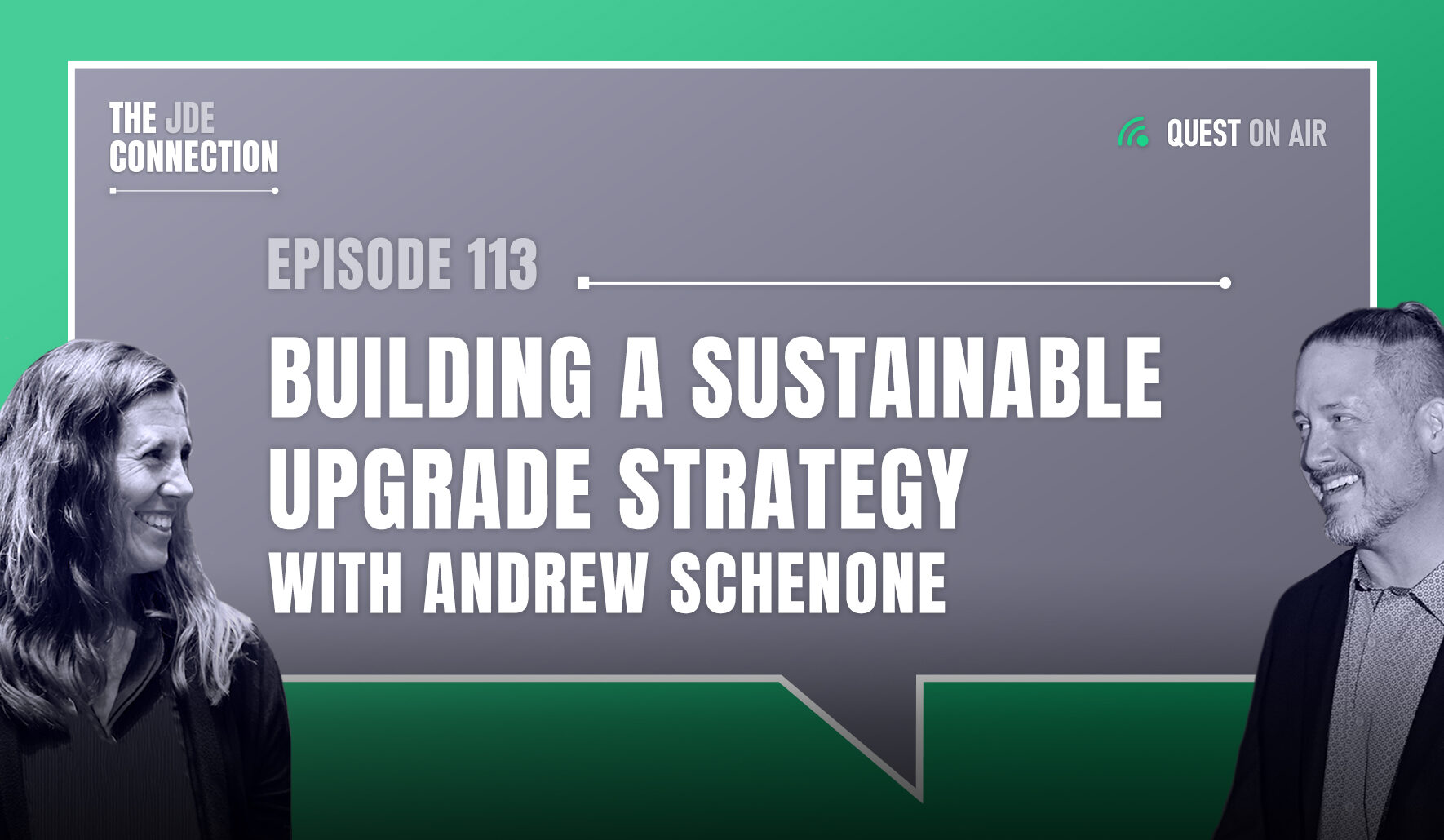
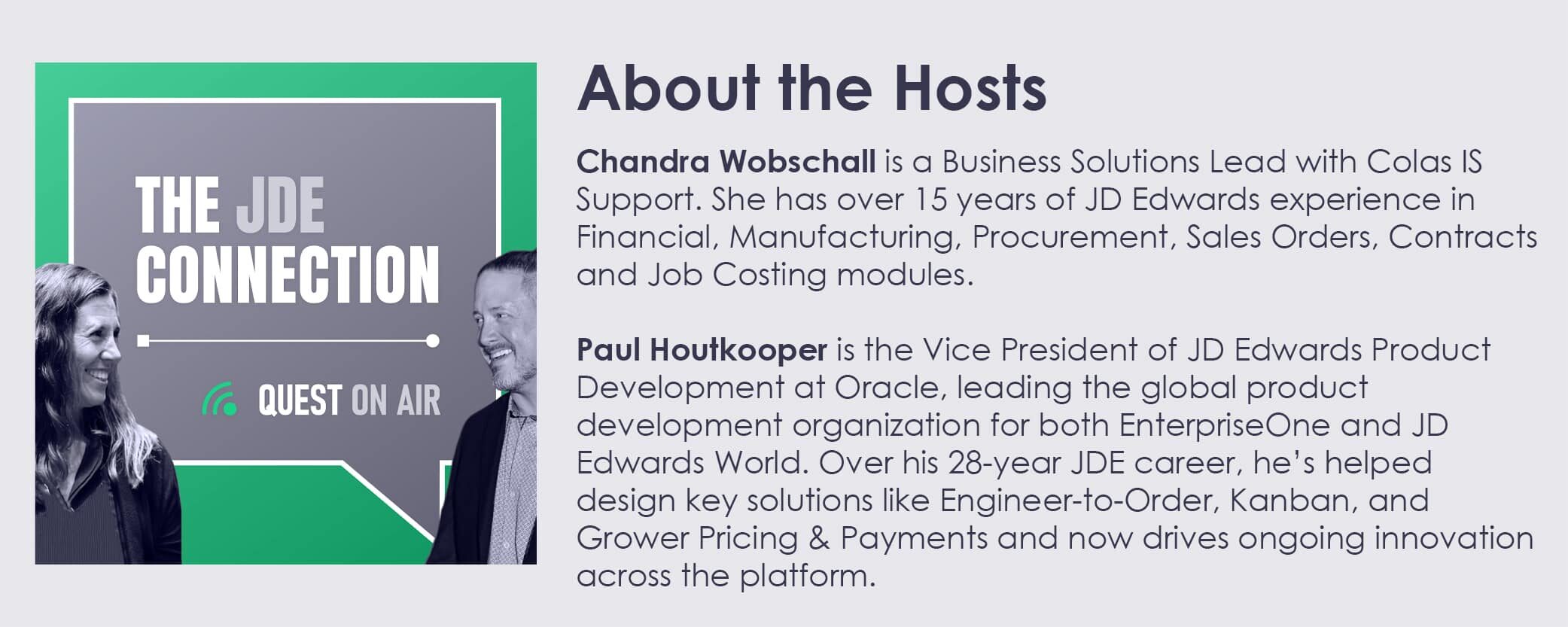
Hosted by Chandra Wobschall and Paul Houtkooper
Hey JDE Connection listeners, Chandra and Paul here!
When people talk about JD Edwards upgrades, the conversation usually starts with testing, timelines, and all the work involved. But after sitting down with Andrew Schenone from MacLean-Fogg, we found ourselves thinking about something much bigger. Sustainable upgrades are not really about the upgrade at all. They are about the decisions an organization makes long before a new release ever arrives.
Andrew shared how his team has spent years creating an environment where staying current is simply part of how they operate. It is a mindset that prioritizes consistency over scrambling, and we think there are lessons every JD Edwards organization can take away from that approach.
Building Better Habits
One thing we appreciated throughout the conversation was that there was no secret formula. Instead, Andrew described years of intentionally building repeatable processes, documenting critical business functions, and creating a testing strategy that gets a little better with every release.
That kind of discipline may not grab headlines, but it does produce results. What was once a lengthy upgrade effort has become a much shorter, far more predictable process. It reminded us that continuous improvement rarely comes from one big breakthrough. More often, it comes from making small improvements over and over again.
Automation Starts with Process
It’s easy to assume that faster upgrades are all about automation. As we talked with Andrew, it became clear that automation is only part of the story.
Before his team ever looked at automating test scripts, they invested the time to standardize their testing and understand exactly what needed to be validated. That foundation is what makes automation worthwhile.
It is a good reminder that technology works best when it supports a well-defined process. Without that process, automation simply helps you repeat the same problems more efficiently.
The Power of Saying No
One of the moments that really stood out to us was hearing that McLean-Fogg has only two base modifications.
That kind of restraint takes commitment. It also takes a willingness to challenge requests and ask whether the software really needs to change or whether the business process can adapt instead.
We especially liked Andrew’s perspective on sharing best practices across the organization. Often, the answer was not creating something new. It was learning how another team had already solved a similar problem.
That approach not only simplifies upgrades, it also encourages collaboration and consistency across the business.
Midwesternism of the Day
This week’s Midwesternism starts with a familiar brunch beverage and ends with a couple of words that left at least one of us wondering if someone had made them up.
Tune In Next Week
We’re only halfway through our conversation with Andrew. Next week we’ll explore how his team is beginning to automate JD Edwards testing with Orchestrator, why managing test data is often the biggest challenge, and how Lean thinking can influence ERP strategy in ways you might not expect.
We hope you’ll join us for the rest of the conversation.
Until next time, let’s keep learning, sharing, and most importantly, laughing together.
Toodles!

Missed an episode? Check out the full episode list! Also, be sure to subscribe on your favorite podcast provider, or select a provider below!
 |  |  |  |
Learn More
Quest Oracle Community is where you learn. Ask questions, find answers, swap stories and connect to other JD Edwards customers and product experts in the JD Edwards Community, where you can also check out what’s happening in the Business Analyst SIG.