We Are Building the Next JD Edwards, Together
-
Posted by Quest Customer Learning Team
- Last updated 10/19/26
- Share

A practitioner’s reflection on Quest Oracle Community’s INFOCUS 2026: where our community is headed, what we are building, and why we only get there together.
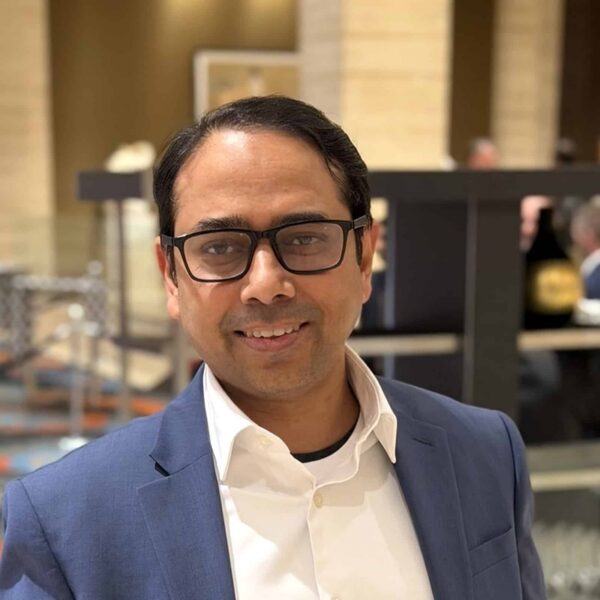 By Mohd Shahid Equbal
Every JD Edwards shop knows this one. EDI handles our biggest trading partners. A portal or an API handles a few more. And then there is the long tail of customers who still email a purchase order as a PDF. Someone in customer service opens it and keys it into P4210, line by line. A customer part number gets matched to the wrong item. A quantity gets fat-fingered. Line seven of nine never gets keyed. Multiply that by a few hundred orders a week, and you have a corner of order entry that twenty years of integration never quite reached.
At INFOCUS 2026 in Denver, I watched that same purchase order become a JD Edwards sales order in about a minute, without a single wrong line. AI read the PDF. An orchestration matched every line against JD Edwards master data: the customer by its address, each part number through the customer item cross-reference. Only when every line matched did it create the order through P4210. Anything that didn’t match was held, and a person got an email naming the exact line to fix.
The technology was impressive. How it was built stayed with me longer. Customers, partners and Oracle each contributed a piece, in the open, for everyone else to use. That is what INFOCUS 2026 was really about.
EnterpriseOne Is Still EnterpriseOne
Oracle opened Monday morning with a theme that ran through the whole week: modernization without disruption. It began by looking back, to a JDE Everest manual on a wooden desk, where many of us started. The product has changed enormously, and it is still ours.
Then came the roadmap, every item marked as planned and subject to change:
- Redwood is coming. The interface evolves from Alta to Redwood, aligned with Oracle Fusion Cloud, while UX One, P4210 and Orchestrator Studio stay familiar. As the slide put it: EnterpriseOne is still EnterpriseOne.
- Release 27 lays a modern, more secure foundation. Java 8 moves to Java 21. Solaris, AIX, DB2 LUW and WebSphere leave the platform portfolio. From January 1, 2027, new application updates are 64-bit only.
- A JD Edwards MCP Server for the digital workforce. AI agents ask business questions, run reports, monitor inventory and execute orchestrations such as creating a purchase order, all through existing JD Edwards security and business logic. A separate Server Manager MCP server brings AI-assisted administration.
Customers then made the theme real through four ideas: stay current, adopt continuously, enable your people, extend your workforce.
- Darling Ingredients keeps JD Edwards vanilla across 11 languages and updates every year.
- Fulton Hogan put Oracle Guided Learning inside JD Edwards for more than 1,400 active users.
- Central National Gottesman uses AI to absorb the variability of emailed POs and invoices so EDI and JD Edwards can execute at scale.
Oracle’s closing slide carried a single line. I kept coming back to it all week, and I will come back to it at the end of this piece.
So, Where Are We Headed?
JD Edwards stays the system of record. Our processing options, versions, AAIs and approval routes exist so identical conditions produce identical results, and so an auditor can always ask what happened and why. That determinism is the most valuable thing we own.
What changes is everything around the core. AI reads what people used to retype: purchase orders, invoices, emails, logs. It answers questions in plain language over JD Edwards data, drafts the work, and flags the exceptions. Agents begin to work like digital coworkers in receiving, accounts payable, order entry and CNC support.
And the community has already settled on the rule that makes it safe. Nobody published it as a standard. It showed up, independently, in room after room:
The agent proposes. The orchestration executes. A human approves what matters.
This is not a technology choice. It is a control design. A language model is probabilistic. JD Edwards is deterministic. The community has decided the boundary between them is an orchestration, running under JD Edwards security, with a person signing off on anything that matters.
Six Things Our Community Is Building Together
No single company is building this future. It is being assembled from patterns that customers, partners and Oracle each contribute. Here are the six I saw taking shape across the week.
- Orchestrator becomes the tool layer for AI. The service requests, form requests and data requests we have built for years are becoming the tools an AI is allowed to call. Practitioners are already putting MCP servers in front of AIS to expose them safely, and the planned JD Edwards MCP Server will make that native.
- Agents with guardrails. The teams furthest ahead let agents read through data requests long before they write through form requests. Each agent runs under a named service account with least privilege. Autonomy is tiered, so anything touching production waits for a named approver. Orchestrations are designed to be safely re-run, and Release 26 can now capture exception messages into orchestration variables so a failure triggers a business action, not a dead end.
- Data you can trust. Julian dates, implied decimals and UDCs that mean different things in different companies break an AI answer exactly the way they break a report. The answer is a governed semantic layer: one definition of the numbers that dashboards, spreadsheets and agents all read, often with models kept private inside the company’s own perimeter.
- Documents that become transactions. Email attachments, PDFs, spreadsheets, EDI and XML are flowing through one reusable inbound path: extract, validate against JD Edwards master data, then create the transaction through standard inbound processing so JD Edwards validation and security still apply. Build it once, and the next five use cases cost a fraction of the first.
- A lighter core that stays current. Custom code is giving way to personal forms, form extensions, logic extensions, widgets and notifications, so every update costs less. Package Build and Update Manager have moved to a web-first lifecycle, so staying current takes less effort every year.
- AI in how we build. Requirements, test plans, code reviews and documentation are being drafted with AI. The developer’s value moves to validation and governance: deciding what is correct, what is safe to promote, and who answers for it. As I put it in my own session with my colleague Sunil Swain: the schema is not the context. A model can read F0911, but it cannot know which ledger your finance team trusts.
The Community Loop
What makes this community unusual is not any one innovation. It is the loop that connects them.
A customer hits a wall and shares it. A peer in the room has already solved half of it. A partner turns the pattern into something repeatable. Oracle hears the request, often in a Quest SIG meeting, and builds it into the product. The next customer starts where the last one finished.
I saw that loop close in Denver. In the Quest Manufacturing SIG’s enhancement meeting, members noted that Reverse Ship Confirmation began as a request in that very room. The next morning, a session taught customers how to use it in Release 26. From a frustrated user to a shipped feature, through the community. The Quest JDE Tech SIG and Oracle hold a standing Coffee and Connect. And on the final afternoon, The Quest JDE Connection podcast recorded live in front of the room, with AJ Schifano looking back on decades of JD Edwards innovation as he heads into retirement. Ideas travel between the podcast, the forums and the SIGs until someone turns them into a working solution.
The loop also runs on honesty. Some of the most valuable sessions were the ones that showed what broke: testing that quietly cut corners, a cutover that ran long, a configuration trap that cost someone a night. As one speaker said to the room: “Say it out loud. Somebody in this room has already lost a night to it.” Documentation tells you how a feature works. Only a peer tells you where it hurt.
The People Behind It
Every technical conversation eventually became a people conversation. The biggest risk in many JD Edwards shops is not a software deadline. It is the person quietly planning their retirement, carrying knowledge nobody else holds.
The community is answering. A new Quest AI SIG is giving members a place to ask what AI really means for their JD Edwards environments. The Quest Construction SIG is back at the table. The Quest Oracle Guided Learning SIG is helping organizations bring every user along with each release. Quest’s Emerging Leaders program is investing in the next generation.
And yes, it was a lot of fun. On the second night, the Blockbuster Bash turned the Exhibitor Showcase into a rewind to the days of VHS and DVDs, with heroes, villains and Hollywood icons trading upgrade stories between the booths. Quest-opoly sent customers across the show floor with chance cards in hand, which is a clever way to make sure you meet the partner who has already solved your problem. Add the kick-off networking tables by track, the welcome reception on the first evening, and a live podcast where the audience got a vote (on a ponytail, of all things). The person you laugh with at the party is very often the one you call during your next upgrade.
Why INFOCUS Matters
With webinars, forums and AI assistants at our fingertips, why do we still come to Denver?
Because the future of JD Edwards does not live in any one place. It is spread across thousands of practitioners, each holding one piece: an orchestration pattern that worked, a security model that held up in an audit, a cutover that went sideways. Only a room full of peers lets those pieces meet, and lets you see that five strangers solved the same problem the same way.
Let’s Get Involved Before INFOCUS 2027
- Become a member of Quest Oracle Community, where benefits include direct connections to other members, extensive education resources and trainings, exclusive networking opportunities, conference discounts and more.
- Join a Quest Community SIG. That is where enhancement requests take shape before they reach Oracle.
- Listen to The JDE Connection to keep the conversation going between conferences. The live INFOCUS episode and the recap that followed are a good place to start.
- Bring one honest story to Quest’s BLUEPRINT 4D 2027 in Chicago, or to INFOCUS 2027. One thing you built, and one thing that broke.
- Draw your AI line before you buy an agent. Decide what stays deterministic, who approves what, and which service account an agent runs under.
- Get current, and stay there. Release 27 turns 64-bit from a preference into a deadline.
- Bring in the next generation. The talent gap closes one mentored person at a time.
The Bottom Line
JD Edwards is not standing still, and neither is the community around it. We are building the intelligent ERP the way this community has always built things: AI at the edges, determinism at the core, governance at the boundary, and most important of all, people at the center.
That closing line from the keynote that I saved for later? I have read it many times since Denver. Every word is my favorite and each one earns its own place.
Together. Not Oracle alone. Not partners alone. Not customers alone. The enhancement that started in a SIG room and shipped in a release. The fix someone shared so you did not lose the same night they did. Nothing we saw in Denver was built in isolation.
Relentlessly. This is the word I love most. Relentless is not a burst of energy before a go-live. It is the update you apply every single year. It is the orchestration you harden after the third failure. It is the question you keep asking in the forum until someone answers, and the answer you post when the next person asks. It is showing up again next year with something new to share.
Improve. Make what we already run better: a cleaner core, a current release, data we can trust, and users who truly know the system.
Innovate. Build what did not exist yesterday: agents with guardrails, documents that become transactions, an ERP you can simply ask.
Improve without innovating, and we stagnate. Innovate without improving, and we build on sand. Together, and relentlessly, the two become a strategy.
A community is not the people who attend. It is the people who give. So give, and then come back to Denver with something new to share.
“Together, we will relentlessly improve and innovate.”
Let that sink in.
That was Oracle’s promise on the first morning of INFOCUS 2026. Let it be ours, too.
Mohd Shahid Equbal is an Oracle ACE Associate and Manager of ERP Development at Connection, with more than twenty years of experience in JD Edwards. He spoke at Quest’s INFOCUS 2026 on AI in JD Edwards development and writes about AI in enterprise ERP at blog.meshahid.ai.